
PRP vs. Cortisone: Which Injection is the Best Choice for Your Joint Pain?

Your knee has been aching for months. Or maybe it's your shoulder that screams at you every time you reach for something on the top shelf. You've tried rest, ice, and physical therapy. Now your doctor mentions injections, and suddenly you're faced with a choice: PRP or cortisone?
It's a question we hear all the time. And honestly, it's a great one to ask, because these two treatments work in fundamentally different ways, and the right choice depends entirely on your situation, your goals, and your timeline.
Let's break it down so you can walk into your next appointment feeling informed and confident.
What Exactly Is Cortisone?
Cortisone injections have been the go-to treatment for joint pain for decades. They're a type of corticosteroid, a powerful anti-inflammatory medication that gets injected directly into the painful joint or tissue.
Here's how it works: cortisone reduces inflammation quickly. Like, really quickly. Many patients feel significant relief within days, sometimes even hours. If you've got a big event coming up, a vacation you can't miss, or you just need to function without constant pain, cortisone can feel like a miracle.
But here's the thing: cortisone doesn't actually heal anything. It's essentially hitting the mute button on your pain signals. The underlying problem? Still there. The inflammation will likely return once the medication wears off, which typically happens anywhere from a few weeks to a few months later.
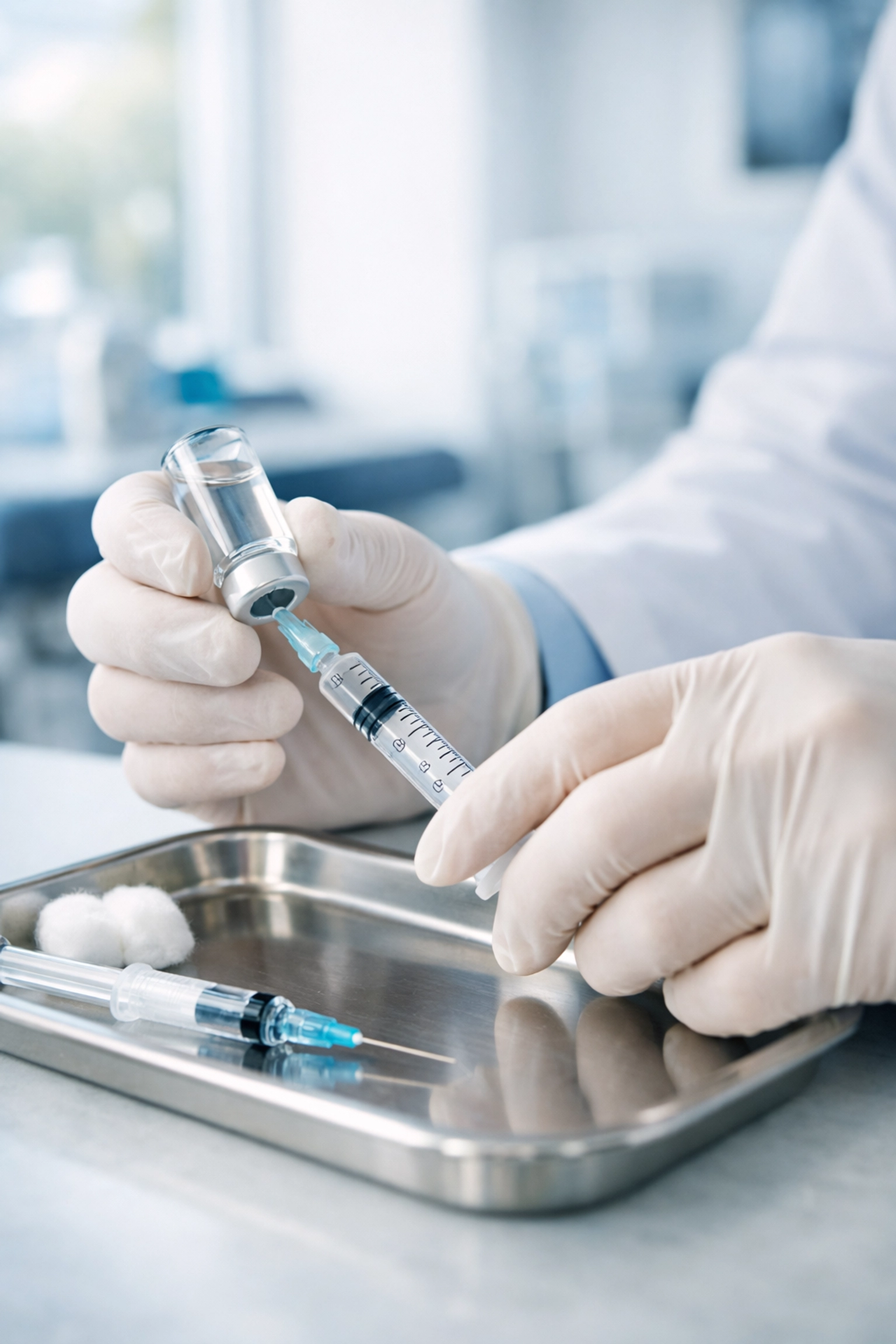
What Is PRP, and How Is It Different?
PRP stands for Platelet-Rich Plasma, and it takes a completely different approach to treating your joint pain.
Here's the process: we draw a small amount of your own blood, spin it in a centrifuge to concentrate the platelets (the cells packed with growth factors and healing proteins), and then inject that concentrated solution directly into your injured or damaged tissue.
Instead of masking inflammation, PRP works with your body's natural healing mechanisms. Those concentrated platelets release growth factors that stimulate tissue repair, reduce inflammation naturally, and promote regeneration at the cellular level.
The trade-off? PRP takes longer to work. You won't walk out of the office feeling like a new person. Most patients start noticing improvement around the 4-6 week mark, with continued gains over several months.
If you've been searching for a "prp injection near me," you're probably already intrigued by this regenerative approach. And for good reason: the research on PRP's long-term benefits is compelling.
The Timeline: Short-Term Relief vs. Long-Term Healing
This is where the rubber meets the road.
In the first 3-6 weeks, cortisone typically outperforms PRP in terms of pain relief. It's faster, it's more dramatic, and if you need to get back to life immediately, it delivers.
After 12 weeks, the picture starts to shift. Studies show that PRP begins demonstrating significantly better functional outcomes: meaning not just less pain, but better movement, better strength, and better overall joint function.
By 24 weeks, PRP shows substantial advantages in both pain management and overall function compared to cortisone. The initial "slowness" of PRP pays dividends down the road.
Think of it this way: cortisone is like taking out a loan against your future comfort. You get relief now, but you'll likely be back for another injection (and another, and another). PRP is more like investing in your joint's long-term health. The returns take time, but they're more sustainable.

Side Effects: What You Need to Know
No treatment is without risks, so let's talk about what you might experience with each option.
Cortisone Side Effects
Cortisone is generally safe when used sparingly. But repeated injections come with some real concerns:
Tendon weakening: Corticosteroids can actually break down tendon tissue over time, which is particularly problematic if you're dealing with conditions like rotator cuff issues or Achilles tendinopathy
Cartilage damage: Some research suggests that frequent cortisone injections may accelerate cartilage breakdown in arthritic joints
Skin and tissue changes: Depigmentation (lightening of the skin) and fat atrophy (loss of fatty tissue) can occur at the injection site
Blood sugar spikes: If you have diabetes, cortisone can temporarily raise your blood sugar levels
Most orthopedic surgeons limit cortisone injections to 3-4 per year in any given joint to minimize these risks.
PRP Side Effects
Because PRP uses your own blood, the risk of allergic reaction or rejection is essentially zero. The most common side effects are:
Temporary increased pain: Some patients experience a flare-up for a few days after injection as the healing process kicks into gear
Swelling and stiffness: Mild inflammation at the injection site is normal and typically resolves within a week
Infection risk: As with any injection, there's a small risk of infection, though this is rare
Overall, PRP has a favorable safety profile, especially for patients concerned about the long-term effects of repeated cortisone use.
So, Which One Should You Choose?
Here's where we get practical. The best choice depends on several factors unique to you.
Cortisone might be the better choice if:
You need immediate relief for an upcoming event, travel, or work obligation
You have advanced arthritis with significant degenerative changes
You're dealing with acute inflammation that needs to be calmed down quickly
You've already tried PRP or other regenerative options without success
Cost is a significant concern (cortisone is typically covered by insurance, while PRP often is not)
PRP might be the better choice if:
You're looking for longer-lasting results and don't mind waiting for improvement
You have mild to moderate joint degeneration or soft tissue injuries
You're younger and more active, wanting to preserve joint health for the long haul
You've had multiple cortisone injections and they're becoming less effective
You want to avoid the potential tissue-weakening effects of corticosteroids
You're dealing with tendon issues like rotator cuff problems or chronic tendinopathy

Can You Do Both?
Absolutely. In fact, a combined approach sometimes makes the most sense.
For example, we might use a cortisone injection to get your pain under control initially, then follow up with PRP a few weeks later to promote actual healing. This gives you the best of both worlds: immediate relief plus long-term regeneration.
The key is having an honest conversation with your orthopedic surgeon about your goals, your timeline, and your expectations.
The Bottom Line
There's no universal "winner" in the PRP vs. cortisone debate. Both treatments have their place in modern orthopedic care.
Cortisone remains an excellent tool for fast, effective inflammation control. PRP offers a regenerative approach that aligns with your body's natural healing capabilities and provides sustained improvement over time.
If you've been dealing with nagging joint pain and wondering whether injections might help, the first step is getting a proper evaluation. We can assess the specific condition of your joint, discuss your activity level and goals, and help you determine which approach: or combination of approaches: makes the most sense for you.
Ready to explore your options? Schedule a consultation and let's figure out the best path forward for your joints.

Comments