
Deep Hip Pain? It Might Be a Labral Tear

You know the feeling. That deep, nagging ache in your groin or front of your hip that just won't quit. Maybe it started after a long run. Maybe it crept up on you slowly over months. Either way, it's affecting everything, how you walk, how you sleep, and definitely how you feel about your next workout.
If this sounds familiar, there's a good chance you're dealing with something called a hip labral tear. And before you panic, let's talk about what that actually means.
What Exactly Is the Hip Labrum?
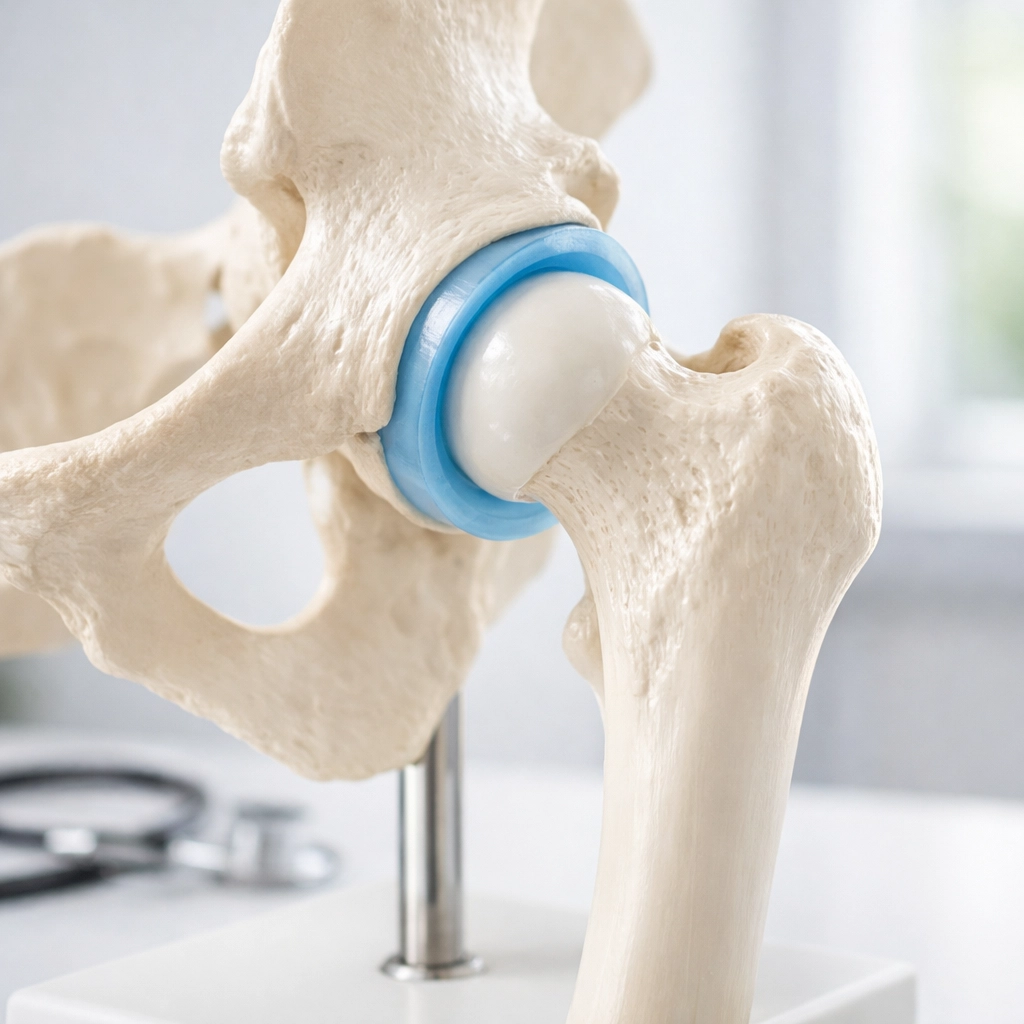
Think of your hip joint like a ball sitting in a socket. The "ball" is the top of your thigh bone (femur), and the "socket" is part of your pelvis (the acetabulum). Pretty straightforward, right?
Now, surrounding that socket is a ring of cartilage called the labrum. Its job is to deepen the socket, provide stability, and help distribute pressure evenly across the joint. It also acts like a seal, keeping the joint fluid where it belongs so everything moves smoothly.
When that labrum gets damaged, whether from an injury, repetitive motion, or structural abnormalities, you've got yourself a labral tear. And that deep hip pain you've been feeling? It suddenly makes a lot more sense.
The Symptoms: More Than Just Hip Pain
Here's the tricky part about labral tears: the symptoms can be sneaky. They don't always scream "something is wrong!" Sometimes they whisper.
Common signs of a hip labral tear include:
Deep groin pain – This is the hallmark symptom. It's not surface-level discomfort; it feels like it's coming from deep inside the joint.
Clicking, catching, or locking – You might feel or hear something "catching" when you move your hip, especially during rotation.
Stiffness – Particularly after sitting for long periods or first thing in the morning.
Limited range of motion – Activities like squatting, pivoting, or crossing your legs might feel restricted.
Pain with activity – Walking, running, or sports that involve twisting motions tend to make things worse.
The frustrating thing? These symptoms can overlap with other hip conditions. That's why getting an accurate diagnosis is so important.
The Hip Impingement Connection
Here's where things get interesting. Labral tears don't usually happen in isolation. In many cases, they're caused by an underlying condition called femoroacetabular impingement, or FAI for short.
FAI occurs when the bones of your hip joint aren't shaped quite right. Maybe the ball is more oval than round. Maybe the socket is too deep. Either way, these structural quirks cause the bones to bump against each other during movement.
Over time, that repeated contact damages the labrum. It's like a door that doesn't quite fit its frame, eventually, something's going to wear down.
There are two main types of FAI:
Cam impingement – The femoral head (ball) isn't perfectly round, causing it to jam against the socket during movement.
Pincer impingement – The socket covers too much of the femoral head, leading to pinching of the labrum.
Many people have a combination of both. And here's the kicker: you might have FAI and not even know it until a labral tear develops and symptoms appear.
How Do We Diagnose a Labral Tear?
If you're experiencing that deep, anterior hip pain we've been talking about, getting evaluated is the logical next step. Diagnosis typically involves a few key components.
Physical examination – We'll assess your range of motion, check for pain with specific movements, and perform tests designed to stress the labrum. One common test involves flexing your hip, rotating it inward, and applying pressure. If that recreates your pain, it's a strong indicator.
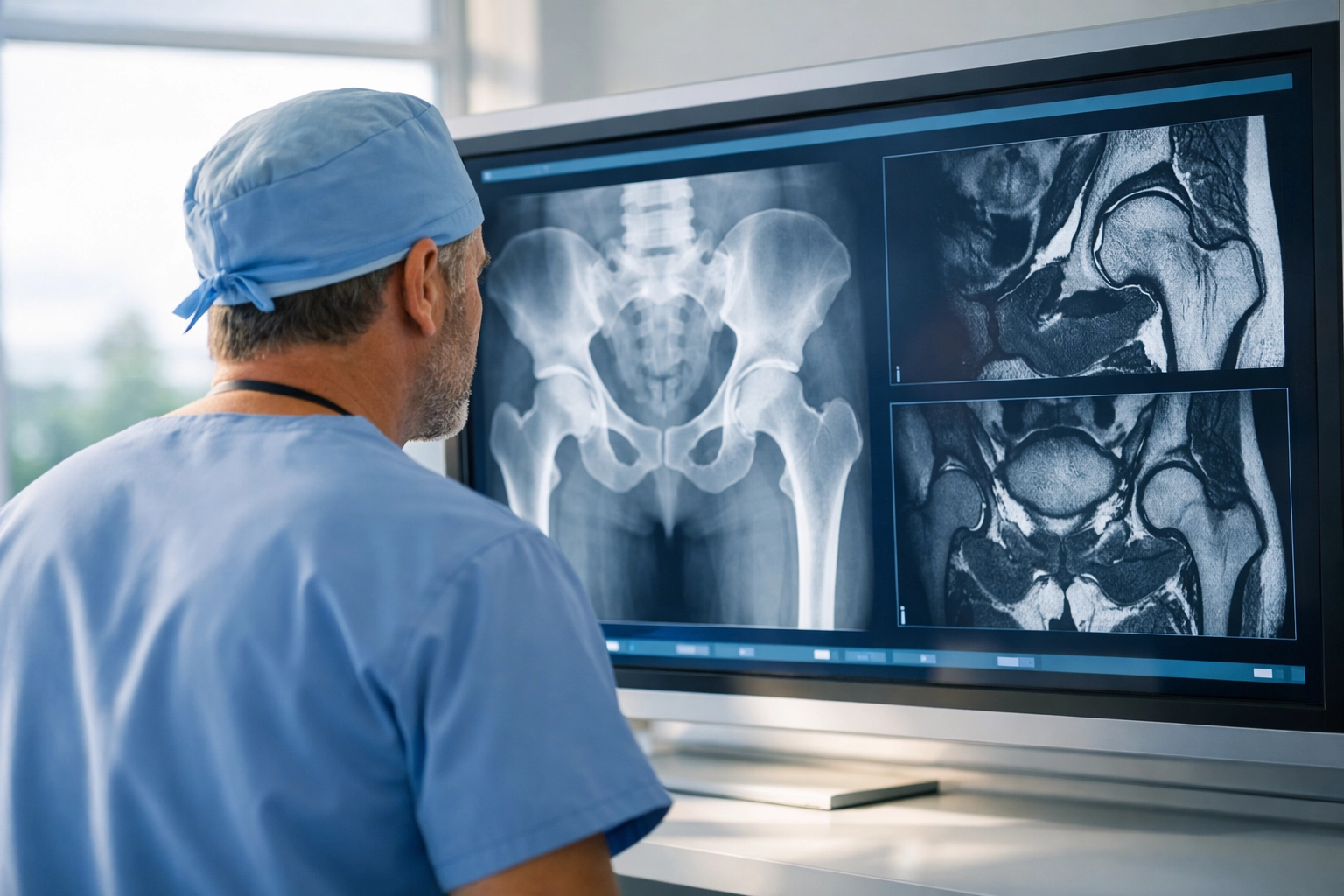
Imaging – X-rays help us see the bone structure and identify signs of FAI. But to actually visualize the labrum itself, we need an MRI, specifically, an MRI arthrogram, where contrast dye is injected into the joint to make soft tissue damage more visible.
Getting the right diagnosis matters because it determines your treatment path. A labral tear with underlying impingement requires a different approach than, say, hip bursitis or a muscle strain.
Treatment Options: Do You Need Surgery?
Let's address the elephant in the room. Not every labral tear requires surgery. The severity of the tear, your activity level, and how much it's affecting your daily life all factor into the decision.
Conservative treatment might include:
Physical therapy – Strengthening the muscles around your hip can help stabilize the joint and reduce symptoms.
Activity modification – Temporarily avoiding movements that aggravate your hip gives the area time to calm down.
Anti-inflammatory medications – These can help manage pain and reduce inflammation.
Injections – Corticosteroid injections can provide temporary relief, and we sometimes use them diagnostically to confirm the hip joint is the source of your pain.
For some people, these approaches provide enough relief to get back to their normal activities. But for others: especially active individuals or those with significant structural issues like FAI: surgery becomes the better option.

When Surgery Makes Sense
If conservative treatment isn't cutting it after a few months, or if imaging shows significant damage, hip arthroscopy is typically the next step.
Hip arthroscopy is a minimally invasive procedure where we use small incisions and a camera to repair or reconstruct the labrum. If FAI is present, we also reshape the bone to prevent future impingement. The goal is to restore normal hip mechanics and protect the joint from further damage.
For patients in the Milwaukee area searching for hip impingement surgery milwaukee, this is exactly the type of procedure we specialize in. Addressing both the labral tear and the underlying impingement gives you the best chance at a full recovery.
What does recovery look like?
First few weeks – Crutches are typically needed, and movement is limited to protect the repair.
Weeks 4–12 – Physical therapy ramps up, focusing on restoring range of motion and strength.
3–6 months – Most patients return to normal daily activities, with athletes gradually returning to sport.
It's not an overnight fix, but for the right candidate, surgery can be the path back to doing the things you love without that constant, nagging pain.
Don't Ignore the Signs
Here's the bottom line: deep hip pain isn't something you should just push through. Labral tears don't heal on their own, and if FAI is involved, the problem will only get worse with time.
The earlier you get evaluated, the more options you have. Maybe you'll do great with physical therapy. Maybe you'll need surgery down the road. Either way, knowing what you're dealing with puts you in control.
If you've been living with hip pain and wondering what's going on, we're here to help. Schedule an appointment and let's figure out what's causing your symptoms: and more importantly, how to fix it.
Your hips are meant to move freely. Let's get them back to doing their job.

Comments