
Getting Back in the Swing: What to Expect from Total Shoulder Replacement

You used to swing a golf club without thinking twice. Now you can barely reach for a coffee mug without wincing. Brushing your hair feels like a workout. And sleeping on your side? Forget about it.
If shoulder arthritis has stolen your quality of life, you've probably heard the words total shoulder replacement floating around. Maybe your doctor mentioned it. Maybe a friend had one. Maybe you've been quietly Googling it at 2 a.m., wondering if it's really as big of a deal as it sounds.
Here's the truth: it is a big deal. But it's also one of the most successful procedures in orthopedic surgery: with roughly 95% of patients completely pain-free within a year. That's not marketing speak. That's real data.
So let's break down what a total shoulder replacement actually involves, what recovery looks like, and how to know if you're a good candidate. No sugarcoating. No scare tactics. Just the facts you need to make an informed decision.
What Is Total Shoulder Replacement, Exactly?
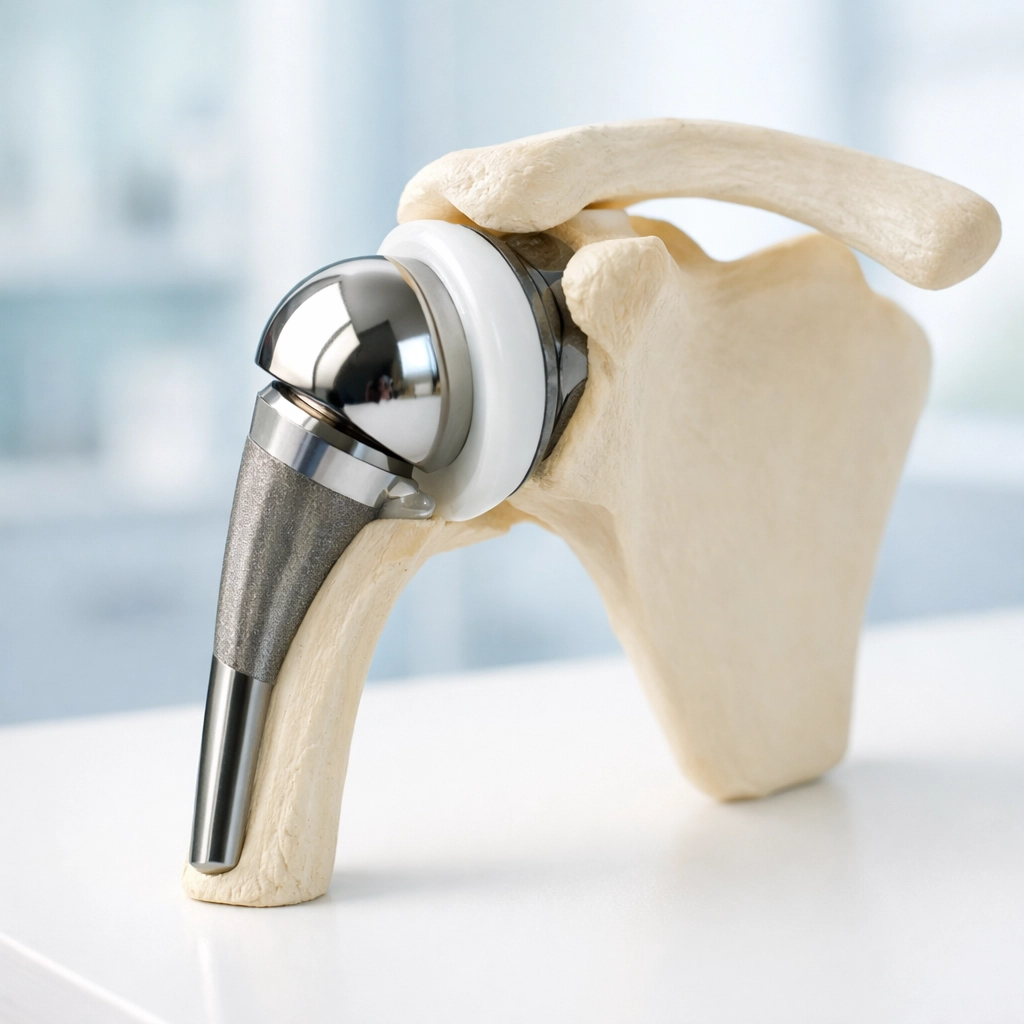
Total shoulder replacement (also called total shoulder arthroplasty) is a surgical procedure where the damaged parts of your shoulder joint are removed and replaced with artificial components: typically a metal ball and a plastic socket.
Think of it like this: your shoulder joint is a ball-and-socket mechanism. When arthritis wears down the cartilage, you're left with bone grinding on bone. That's where the pain, stiffness, and limited motion come from. A replacement gives you a fresh start with smooth, pain-free surfaces.
There are a few different types of shoulder replacements:
Anatomic total shoulder replacement – Mimics your natural anatomy. Best for patients with intact rotator cuff muscles.
Reverse total shoulder replacement – Flips the ball and socket. Ideal when the rotator cuff is severely damaged.
Partial shoulder replacement (hemiarthroplasty) – Replaces only the ball, leaving the socket intact.
Which one is right for you depends on your specific anatomy, the condition of your rotator cuff, and your activity goals. That's a conversation to have with your surgeon.
When Is It Time to Consider Surgery?
Nobody wants surgery. We get it. But there comes a point where conservative treatments: physical therapy, cortisone injections, anti-inflammatory medications: just aren't cutting it anymore.
Here are some signs it might be time to have a serious conversation about total shoulder replacement:
Persistent pain that doesn't respond to medication or injections
Significant loss of motion that interferes with daily activities
Night pain that regularly disrupts your sleep
X-rays showing bone-on-bone arthritis
Failed conservative treatment over 6+ months
If you're nodding along to most of these, you're probably a candidate. The goal isn't to rush you into surgery: it's to give you your life back when nothing else is working.
The Role of Robotic-Assisted Technology
Here's where things get exciting. Modern total shoulder replacement in Milwaukee has come a long way from the procedures of even a decade ago.
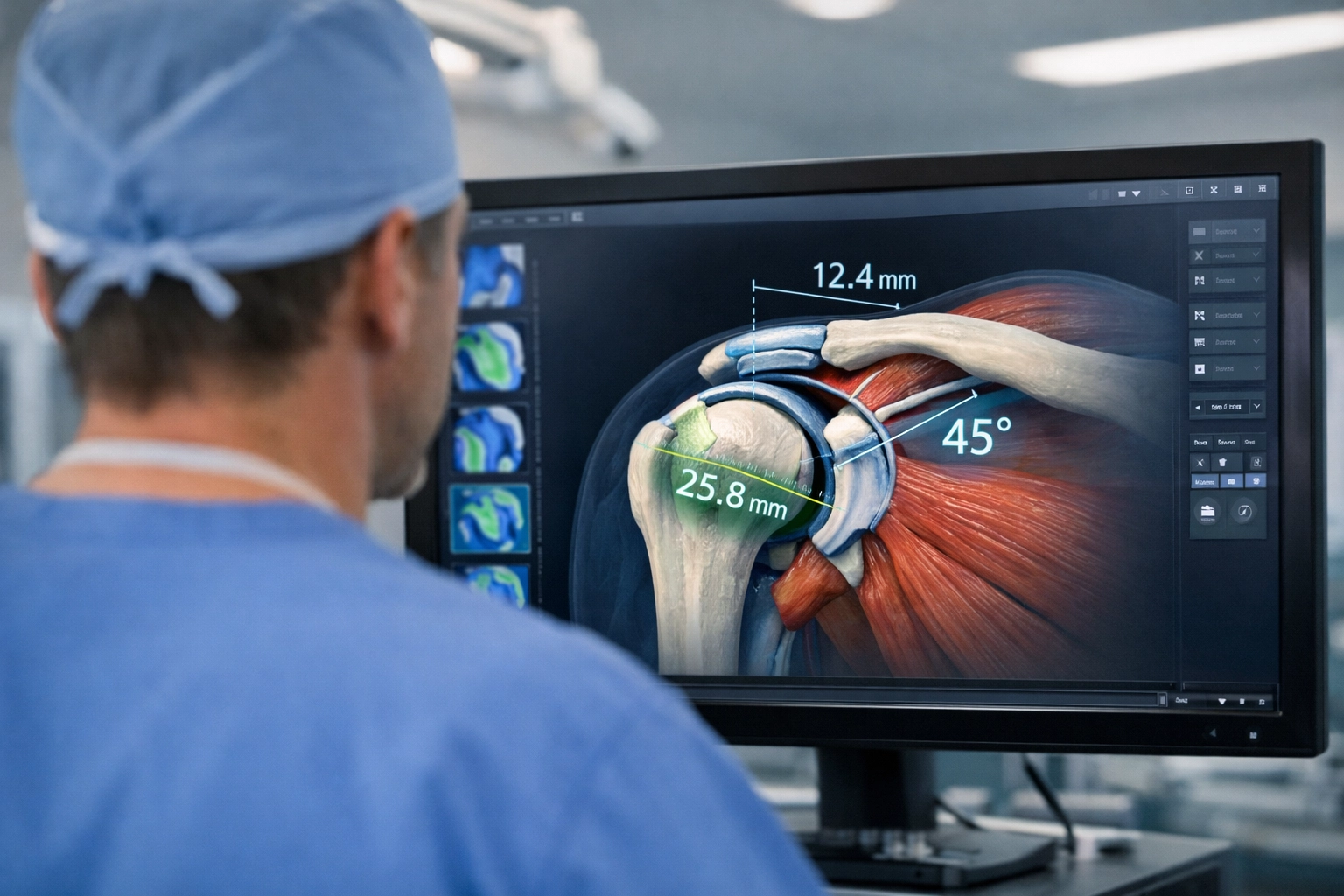
At our practice, we utilize advanced technology and precision planning to optimize outcomes. Robotic-assisted and computer-navigated systems allow surgeons to create a detailed 3D model of your shoulder before surgery. This means:
More accurate implant placement
Better alignment tailored to your unique anatomy
Potentially faster recovery due to less tissue disruption
Improved long-term function
It's not about replacing the surgeon's skill: it's about enhancing it. Think of it like GPS for surgery. You still need a skilled driver, but the technology helps ensure you arrive at the best possible destination.
What Happens During Surgery?
The procedure itself typically takes 1 to 2 hours, depending on complexity. You'll be under general anesthesia, so you won't feel a thing.
Here's the basic rundown:
An incision is made at the front of your shoulder
Damaged bone and cartilage are carefully removed
The new metal and plastic components are precisely positioned
The incision is closed and your arm is placed in a sling
Most patients spend 1 to 2 nights in the hospital before heading home. You'll leave with a sling, pain medication, and a physical therapy plan already in place.
The Recovery Timeline: What to Really Expect
Let's be real: recovery isn't instant. But it's also not as scary as you might think. Here's a realistic breakdown:
Weeks 1-3: The Protection Phase
Your arm lives in a sling. The focus is on managing pain and swelling while allowing initial healing. You can use your hand for light tasks like eating, typing, and writing: but no lifting or raising your arm.
Gentle passive motion exercises begin almost immediately, usually guided by a physical therapist. These keep your shoulder from getting stiff without stressing the repair.
Weeks 4-6: Early Mobility
Pain starts to decrease noticeably. You'll begin more active range-of-motion exercises. Most people can dress themselves and reach for items at shoulder height by the end of this phase.
Months 2-3: Building Independence
This is where things start feeling more normal. You're weaning off the sling, driving again (once cleared), and handling most daily activities. Physical therapy ramps up to focus on stability and controlled movement.
Months 3-6: The Strengthening Phase
Now we're building strength. This is the final push to get your shoulder ready for sports, recreation, and more demanding activities. Most patients return to golf, swimming, and pickleball during this window.
6 Months and Beyond
By six months, most people are back to their usual activities. But here's the thing: improvements can continue for up to a year or more. Patience pays off.

Physical Therapy: Your Secret Weapon
We can't stress this enough: your commitment to physical therapy directly impacts your outcome.
PT typically begins within the first week and continues for 3 months or longer. But the work doesn't stop when you leave the clinic. Home exercises are absolutely critical. Patients who commit to 6 to 9 months of dedicated rehab consistently see the best results.
Think of surgery as building the foundation. Physical therapy is what builds the house.
How Long Will Your New Shoulder Last?
Modern shoulder replacements are built to last. On average, you can expect 15 to 20 years of function from your implant: often longer with proper care and reasonable activity levels.
That said, a replacement isn't invincible. High-impact activities (think heavy weightlifting or contact sports) can accelerate wear. Your surgeon will give you specific guidelines based on your implant type and activity goals.
Is Total Shoulder Replacement Right for You?
Only you and your surgeon can answer that question definitively. But if shoulder pain has become the unwanted centerpiece of your daily life: if you've tried the conservative route and hit a wall: it might be time to explore your options.
Total shoulder replacement isn't about giving up. It's about getting back to doing what you love. Swinging a golf club. Playing with your grandkids. Sleeping through the night without waking up in pain.
If you're searching for total shoulder replacement in Milwaukee, we'd love to talk. Schedule a consultation and let's figure out the best path forward: together.
Your shoulder has been carrying a heavy load. Maybe it's time to give it a fresh start.

Comments