
Ski Season Ready: How to Prep Your Knees for the Slopes

The first snowfall hits, and suddenly you're dreaming about fresh powder, crisp mountain air, and carving your way down the slopes. But here's the reality check: your knees have been sitting behind a desk for the past nine months, and they're definitely not ready for what you're about to put them through.
If you're an active adult or weekend warrior who loves hitting the mountains, you already know that skiing demands a lot from your body. Your knees, in particular, absorb tremendous forces with every turn, mogul, and sudden stop. The good news? You can absolutely get them ready. The key is starting your preparation before you strap on those boots.
Let's talk about how to bulletproof your knees for ski season so you can spend more time enjoying the slopes and less time worrying about injury.
Why Skiing Is So Tough on Your Knees
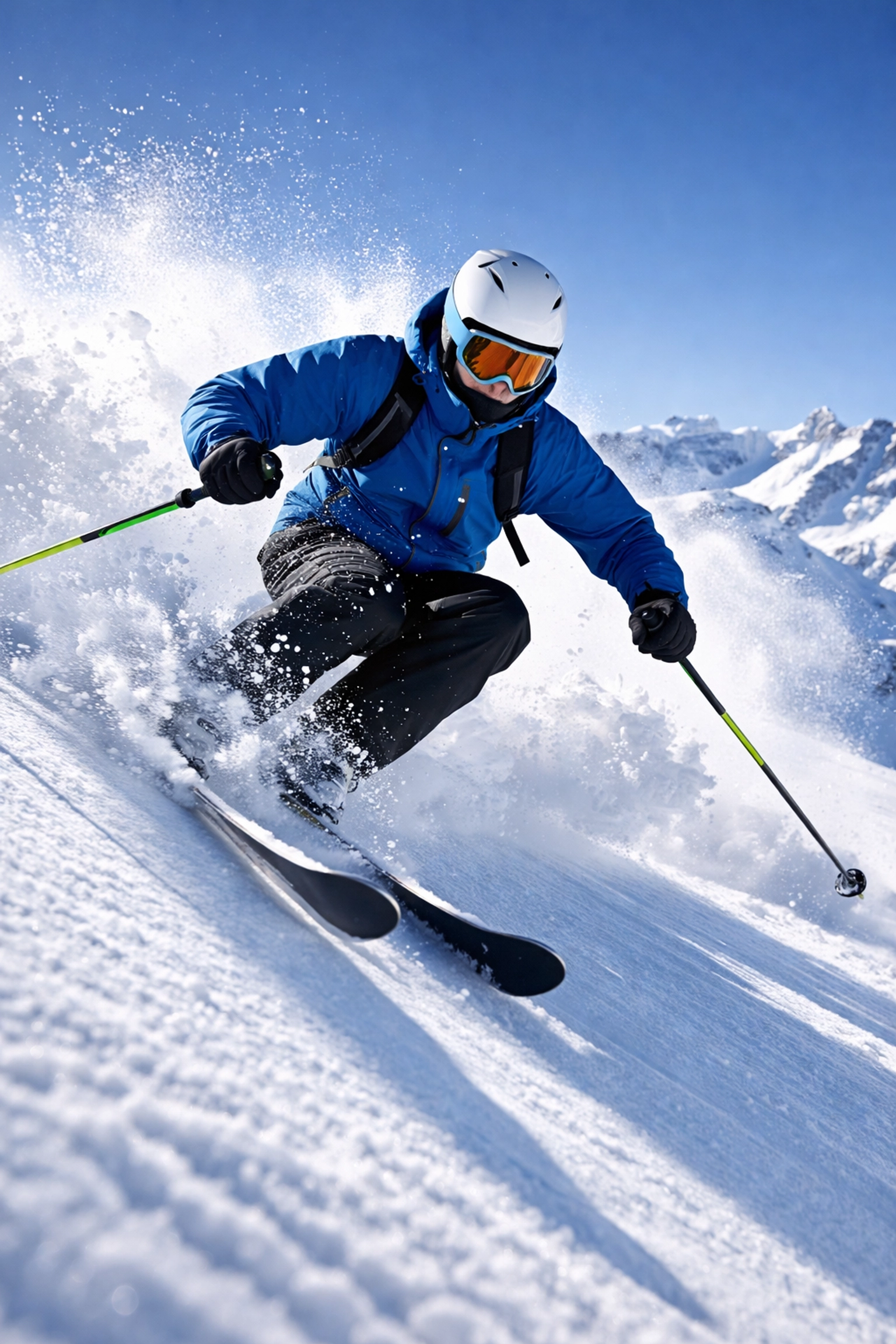
Downhill skiing puts your knees in a unique position, literally. You're in a constant semi-squat, absorbing shock after shock while navigating unpredictable terrain at speed. Your quadriceps are working overtime to keep you stable, while your ACL (the ligament that prevents your shin bone from sliding forward) and meniscus (the cushioning cartilage in your knee) handle rotational forces that can be intense.
Here's the thing: most ski injuries don't happen because the sport is inherently dangerous. They happen because people show up unprepared. Weak muscles, poor balance, and tight joints create a recipe for disaster when you're flying down a black diamond.
The solution isn't avoiding the sport you love. It's training smart so your body can handle what skiing demands.
Building Your Strength Foundation
Strong muscles act as shock absorbers and stabilizers for your knees. Without adequate strength, your ligaments and cartilage take on stress they weren't designed to handle alone. That's when injuries happen.
Your pre-season strength routine should target three areas: your quadriceps, your glutes, and your core. These muscle groups work together to keep your knees tracking properly and absorbing force efficiently.
Here are the exercises that matter most:
Squats : The foundation of any ski prep program. Start with double-leg squats, keeping your knees aligned over your toes. Lower to about 60 degrees of knee flexion initially, then progress deeper as you build strength. Once you've mastered those, move to single-leg variations. These mimic the independent leg work required in skiing.
Lunges : Start at about 80 degrees of knee flexion and work your way to 90 degrees as you get stronger. For an extra challenge, add dumbbells or try walking lunges. These build the eccentric strength your quads need for controlling your descent.
Wall Sits : This one mimics the skiing position almost exactly. Stand with your back against a wall, slide down until your thighs are parallel to the floor, and hold for 20-30 seconds. Your quadriceps will burn, and that's the point. Build up to longer holds over time.
Gluteal Bridges : Your glutes are the powerhouse behind hip stability. Start with one set of 10 reps, holding each lift for about 5 seconds. Progress to single-leg variations once you've nailed the basics.
Monster Walks : Place a resistance band just above your knees and walk sideways, maintaining tension on the band throughout. Complete 5 sets of 8 steps in each direction. This exercise targets your hip abductors, which are critical for maintaining knee alignment during turns.
Aim to perform these exercises at least three times per week for 6-8 weeks before ski season kicks off. Consistency beats intensity here: showing up regularly matters more than crushing one epic workout.

Balance and Proprioception: The Secret Weapon
Strength is only half the equation. You also need proprioception: your body's ability to sense where it is in space. This awareness helps you react to changing terrain and unexpected situations without thinking.
Poor proprioception means slower reaction times. And on the slopes, milliseconds matter.
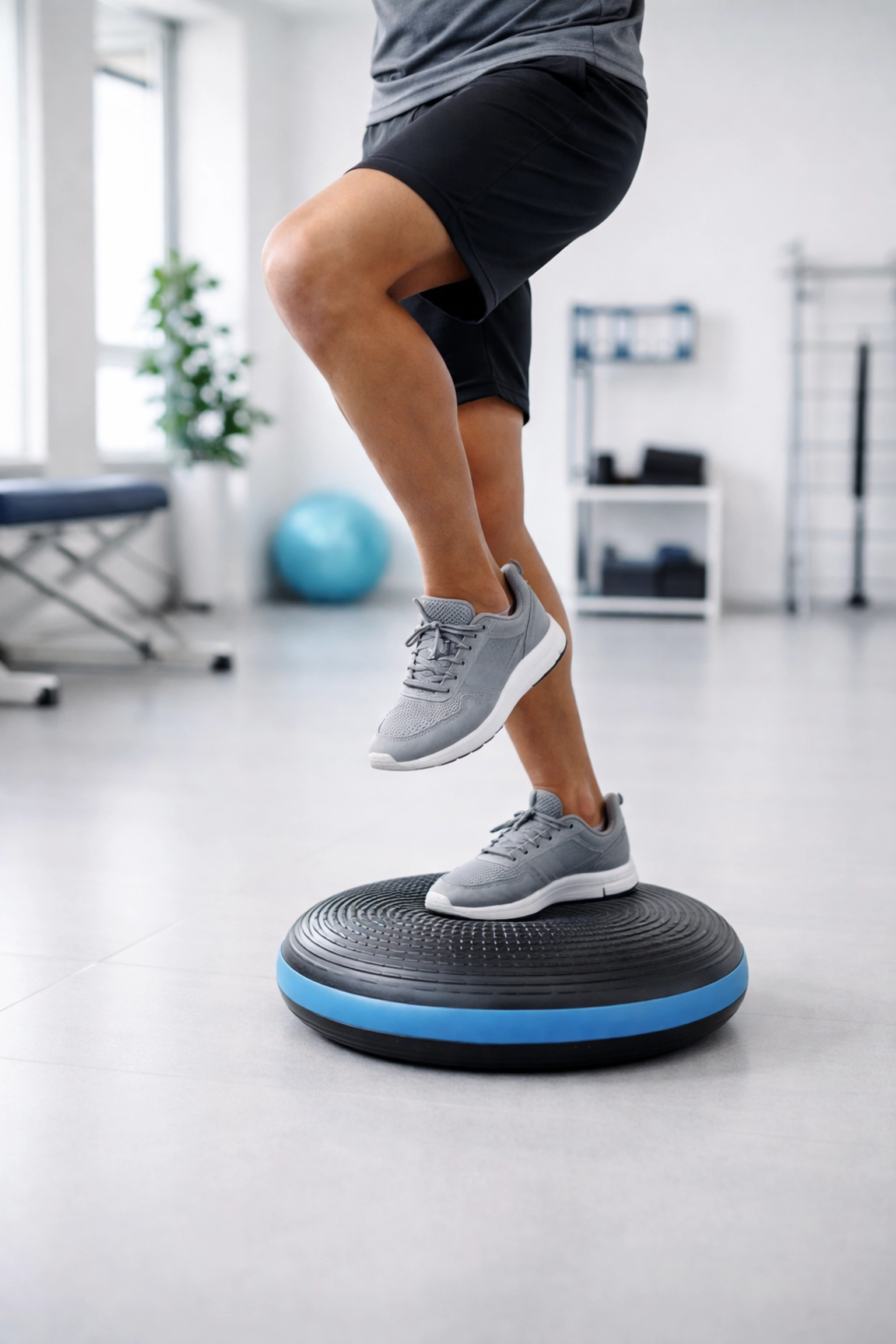
Jump downs are one of the best exercises for building this skill. Start by standing on a 6-inch step or platform. Step off and land softly with both feet, distributing your weight equally between legs. Focus on landing quietly: if you're making a lot of noise, you're not absorbing the force properly. Complete 8-10 controlled landings, then progress to single-leg variations as you improve.
Single-leg balance work is equally valuable. Try standing on one leg while brushing your teeth or waiting for your coffee to brew. Close your eyes to make it harder. These small daily habits add up to significant improvements over time.
Don't Skip the Flexibility Work
Tight muscles limit your range of motion and put extra stress on your joints. If your hip flexors, quadriceps, or hamstrings are locked up, your knees compensate: and that compensation often leads to pain or injury.
Regular stretching should become part of your routine. Focus on:
Hip flexor stretches : Tight hip flexors pull your pelvis forward and change how your knees track during movement
Quadriceps stretches : Essential for maintaining healthy knee mechanics
Hamstring stretches : Balanced flexibility between your quads and hamstrings reduces strain on the knee joint
Hold each stretch for 30 seconds, and avoid bouncing. Dynamic stretching (movement-based) works well before workouts, while static stretching (holding positions) is best for post-workout recovery.
Understanding the Injuries You're Trying to Prevent
Two injuries dominate ski season: ACL tears and meniscus damage. Knowing what these are helps you understand why preparation matters so much.
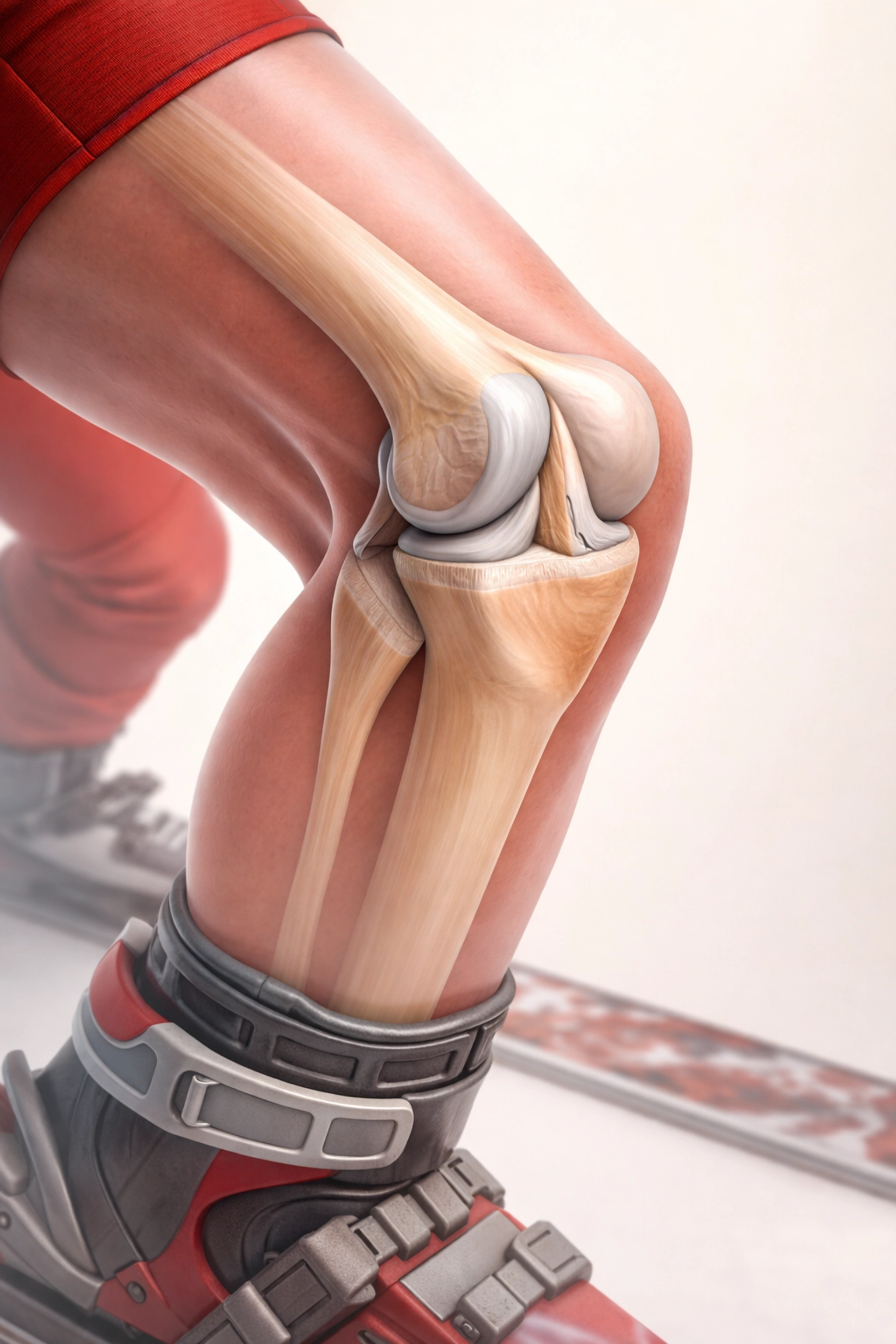
Your ACL (anterior cruciate ligament) runs through the center of your knee and prevents excessive forward movement and rotation of your tibia. ACL injuries often happen during awkward landings, sudden stops, or when your ski catches an edge and twists your knee. The classic scenario? Catching your inside edge during a turn and feeling that dreaded "pop."
We've written extensively about ACL injuries and what to expect if you experience one. If you want to dive deeper, check out our post on demystifying the ACL tear.
Your meniscus is the C-shaped cartilage that cushions the space between your thigh bone and shin bone. Meniscus tears often occur with the same twisting motions that threaten the ACL. Sometimes both structures are injured simultaneously.
The good news? Strong muscles, good balance, and proper technique significantly reduce your risk of both injuries. You're not powerless here.
Core Stability: The Often-Overlooked Factor
Your core isn't just your abs: it's the entire cylinder of muscles that stabilizes your trunk. When your core is weak, your lower body has to work harder to maintain control, and your knees bear the brunt of that extra effort.
Planks and side planks are your go-to exercises here. Start with 20-30 second holds and build from there. A strong core lets you maintain proper skiing posture even when you're fatigued, which is often when injuries happen.
When to See a Specialist
Preparation is powerful, but it has its limits. If you're experiencing any of the following, it's worth getting evaluated before you hit the slopes:
Persistent knee pain that doesn't improve with rest
Swelling that returns after activity
A feeling of instability or "giving way"
Previous knee injuries that were never fully rehabilitated
Significant clicking, catching, or locking sensations
Starting the season with an unaddressed problem is a recipe for making it worse. A quick evaluation can identify issues early and set you up for a safer, more enjoyable season.
If you're dealing with knee arthritis and wondering how to manage it alongside your love for skiing, you might find our post on common knee arthritis mistakes helpful.
The Bottom Line
Getting your knees ready for ski season isn't complicated, but it does require commitment. Start your strengthening program at least six weeks before you plan to ski. Focus on squats, lunges, and gluteal work. Add balance training and flexibility exercises. And listen to your body: if something doesn't feel right, address it early.
Your knees have carried you through countless adventures. With a little preparation, they'll carry you through many more seasons on the mountain.
Ready to make sure your knees are up for the challenge? Schedule an appointment to discuss your ski season goals and make sure you're starting from a position of strength.

Comments